I remember so clearly the first time it happened. It was December 14, 2021, and my daughter, River, was six weeks old.
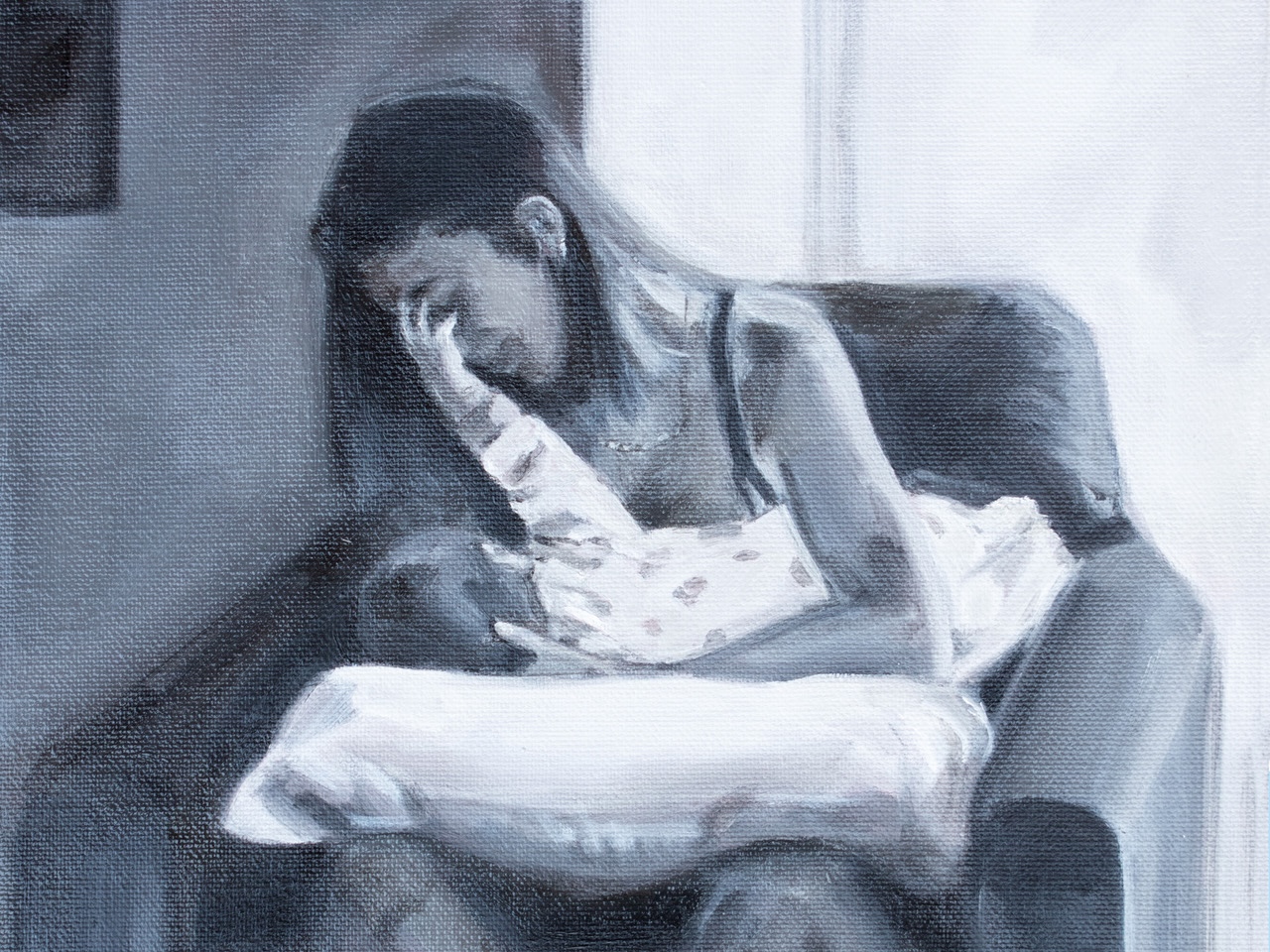
I was home alone with her, and she had just woken up from a nap. The afternoon light came in through her bedroom window as I carried her over to our nursing chair. I sat and positioned her on top of a U-shaped nursing pillow — one patterned with gray baby elephants.
I pulled my shirt and bra to the side, and brought her to my breast. Just like usual. But instead of opening her mouth to latch on, she recoiled. Literally recoiled. Her tiny body tightened. Her face turned red. And she screamed. Screamed and screamed and screamed. A lot of babies that young don’t produce tears yet.
I tried the other breast, then a different position. She continued to scream. Scream at me, scream at my body. Scream at the sight of my breasts — breasts which were, at that point, engorged and starting to leak milk.
“Riv, the milk is right here,” I told her. The wet patch on the nursing pillow was growing larger, swallowing more baby elephants.
I remember that I wasn’t upset. Surprised, sure. But it wasn’t a catastrophe yet.
I pulled her upright and cradled her head against my neck. “Shhh, shhh,” I whispered. She soon calmed down. Just a fluke, a weird baby thing, I thought.
I laid her back down. Same results. Not a fluke.
Unsure what to do, I called my husband.
“Maybe try the bottle?” he said.
And so it began. For the next several months, breastfeeding became a ‘hit’ or ‘miss’ activity — though, it was mostly ‘miss’.
Sometimes she’d start crying right away, other times she’d latch on for a few seconds, then pull off, squeeze her eyes shut, and scream. Please, please, please, I’d beg, as if I could will — or guilt — her into nursing. But I couldn’t. She wouldn’t. And I completely fell apart.
***
Of all the unexpected things I experienced as a first-time mom, not being able to breastfeed was the biggest surprise. I was unprepared for how I reacted and how River’s refusal to do it took over my life.
Obviously, some women can’t breastfeed their babies, or choose not to, and these mothers and their babies are just fine. But I did not choose to stop breastfeeding. In fact, it never occurred to me that my baby would have an opinion in the matter.
The shock I initially felt gave way to devastation, and I was consumed by an unrelenting sadness I couldn’t understand. I was also embarrassed to be this upset about breastfeeding — breastfeeding!? — and yet, there were days when my inability to do it felt like the worst thing that had ever happened to me.
This has, of course, happened to other mothers. In the past, experts used the term “nipple confusion” to describe babies who struggled to switch between bottles and the breast, and who got fussy or refused to nurse. Today, this behavior is more accurately called a “flow preference” or “bottle preference.” And in River’s case, that’s exactly what it was. Nursing isn’t like sucking milk from a straw. It takes work and the milk doesn’t flow out immediately. Drinking from a bottle, by contrast, can be easier and instantly gratifying.
I have many theories about why River developed a bottle preference, ranging from anatomical explanations to my mistakes as an exhausted new mother. And while I’ll never know why it happened, I think there will always be a part of me that wonders if I could have prevented it.
Looking back, it’s tempting to say that I lost my mind for the better part of a year because all I thought about was getting River to nurse again. My obsession strained my marriage. It kept me from wanting to be around other moms. It made me hate my body in an entirely new way. And worst of all, there were days when I resented River for putting me through this.
That I felt, and that those around me felt, that my response to the situation was disproportionate — if not outright irrational — only made me feel worse.
Some mornings I would wake up determined to stay positive. But inevitably, I would find myself watching the clock as River napped or flailed happily on the floor, knowing she’d need to eat soon and that we’d probably both end up crying before I’d give in and pour some breastmilk I’d pumped earlier into a bottle.
Especially in the early days, my breasts were constantly full, constantly uncomfortable. I would start leaking when she cried. In those moments, I felt disgusting — covered in milk, awkward in my postpartum body, sleep deprived, likely unshowered. Of course she doesn’t like me, I thought.
It was a rejection that, to this day, still makes me nauseous to think about. But it was also more complicated than that.
After I gave birth to River, my world got really small. I was aware of things happening in the news — the new omicron variant of COVID, devastating tornados in Kentucky and Tennessee — but all I could focus on was what was right in front of me. A hungry blue-eyed baby. Diapers. Ungodly amounts of laundry.
Don’t get me wrong, I loved this smallness. River was born in late October, and the world felt increasingly cozy as the last of the leaves fell off the trees near our home in Massachusetts. But having a narrow lens also meant that when I stopped being able to breastfeed, something that, objectively speaking, I knew was not apocalyptic, I reacted as though it was.
Newborn babies need to eat every two to three hours, if not more, and a single nursing session can take upwards of 40 minutes. It is not hyperbole to say that breastfeeding was pretty much all I did for the first few weeks of River’s life. It was how I fed her. It was how I got her to sleep. It was how I mothered.
When breastfeeding stopped working, it felt like I stopped working.
Even at the time, I knew my sadness was possible because so much else in my life was safe and stable. I imagine that if I didn’t have maternity leave, or was worried about making rent or taking care of a sick relative, I probably wouldn’t have had the mental space to dwell on breastfeeding. What’s more, knowing it was a privilege to be this distressed made me feel even more pathetic.
“No one died, Miriam,” I’d berate myself. “Your baby just doesn’t want to nurse.”
I’d tell myself to get over it, to stop pitying myself. Some of the people in my life told me this too, though in much kinder terms.
But I couldn’t just move forward. That’s not how grief works.
***
It’s been about four years since this all started, and I have spent a lot of time trying to understand why I reacted the way I did. I’ve read a lot about breastfeeding and postpartum life, but few books or articles acknowledged, let alone addressed, my experience. The conversations among experts tend to be about the pressure women feel to breastfeed and the societal barriers, like a lack of paid family leave, that make it nearly impossible for some women to have the breastfeeding experience they want. These are important discussions to have, but they weren’t what I was looking for.
It was only after I learned there were other women who had equally strong reactions to a challenging breastfeeding situation that I began to think, “Maybe I’m not crazy?” From there, my journalist brain took over. I spent hours reading posts in Facebook groups dedicated to breastfeeding, and I started interviewing women I met through these forums. I talked to perinatal therapists and lactation consultants, too.
Many mothers I spoke with told me that they felt like “a failure” when they struggled to nurse or produce enough milk. Others said the experience left them feeling “out of control,” or like their bodies were “broken” and their sense of self was “hemorrhaging.”
“It makes you doubt your worth,” one woman said.
“It’s the worst way to start motherhood,” said another.
I have no statistics to cite about the number of women who experience what is sometimes called “breastfeeding grief,” but I’ve come to believe that what happened to me — what happened to so many mothers I encountered — is, if not necessarily common, then at least quite prevalent.
I no longer think that I lost my mind when River stopped breastfeeding. But I lost something, and though I didn’t have the language at the time to describe what was happening, I was mourning.
***
I nursed River for the first time about thirty minutes after she was born. She had been lying on my chest, snuggled under a pink and blue-striped hospital blanket, when she began to turn her head slightly from side to side and thrust her tongue out of her mouth. I had read about this, the rooting reflex. She was looking for food.
A nurse lifted River, positioning her face over my right breast. It was awkward, River wiggled, and it took a few tries before her mouth was properly centered above my nipple. But once we got in place, and once I felt the weight of her small, warm body against mine again, she began to nurse right away — a slow arrhythmic suck, swallow. Suck, suck, suck, swallow. It was a completely foreign feeling, a tingly suction. Suck, suck, swallow.
Photos I have from this moment show that my husband was right by my side, one hand on me, one helping to hold River. My face is obscured by the angle of my head and my disheveled hair, but in what I can see, I look scared. Bewildered, even.
“Am I doing this right?” I tried to ask the nurse with my eyes, but she had already turned away to focus on something else.
Based on the timestamps of these photos, I nursed River for about nine minutes. I can’t say I remember much about it.
I tried again about twenty-five minutes later. This time, I was sitting up in the bed with River’s head cradled in the nook of my left elbow. I held my left breast in my right hand, like the nurse showed me, and used my arm to guide River’s face toward my body.
In these pictures, I look more confident. I’m smiling. Suck, suck, swallow. I remember thinking, “I’m doing it.”
Later, I would learn that the way River attached her mouth to my breast — her latch — had not been good and that she had irritated one of my nipples. From that point forward, nursing hurt, especially on the left side. The pain would start in my breast but quickly ripple across my upper torso and down my arms. It was paralyzing, almost. Sometimes I swear I felt it in my toes.
A lactation consultant came to see me a few times over the two and a half days I spent in the hospital. She was a lovely older woman who showed me how to stroke River’s lips to get her to open her mouth wide, how to make sure she latched properly, and how to tickle her jaw if she fell asleep while nursing. There’s something about this stroking motion that reminds babies to start sucking again.
Despite latching poorly in the delivery room, River was apparently nursing well. I’ll never forget when the lactation consultant joked that she wished she could bring another first-time mother on the postpartum ward into my room to observe. I was so proud, it was like I was passing my first real test of motherhood. It hurt like hell, but I was doing it. I was mothering.
So much is foreign in those first few days after birth, and breastfeeding is no exception. I had read books about birth and infant care while pregnant, so I was familiar — at least intellectually — with terms like “proper latch” and “milk coming in” and “let down.” But I don’t think I really understood the physiology of breastfeeding, let alone the mechanics and skill involved, until I had to do it.
On the final morning of my stay in the hospital, my milk did start to “come in,” which is to say, what came out of my breasts was changing. During pregnancy, a woman’s body begins to produce colostrum, a yellow-ish, nutrient-dense liquid. But a few days after a birth, what we think of as breastmilk begins flowing.
I had been told that the feeling of your milk coming in can be “uncomfortable” — an understatement, if you ask me. My breasts were hard, swollen, hot. I didn’t want anything to touch them. Even the tank top I wore felt like too much.
And yet, River had to eat. So, I’d bring her to my chest and hold my breath.
***
I don’t recall ever deciding to breastfeed. It was just something I assumed I would do. My mother breastfed me and my two younger sisters. Most of my cousins and friends who had kids breastfed. I honestly didn’t give it much thought until I was several months pregnant.
At that point, breastfeeding took on a new significance. I wasn’t someone who thought formula was inferior, but I got swept up in the idea that my body could produce everything my future baby needed to survive.
I remember being in the bath one evening, trying to work up the nerve to squeeze my nipples. I was thirty weeks pregnant and curious if I was producing colostrum. As I soaked in the water, I watched a YouTube video about how to hand express breastmilk. I took a deep breath and copied the motion. It’s not a pinch like you might expect, but more of a gentle push and pull movement. It reminded me of milking a cow.
Much to my delight, tiny yellow droplets formed and dribbled down my nipple. I called my husband into the bathroom. “Look what I can do!” I said. We laughed.
From that point on, I’d squeeze out a little colostrum from time to time, just to marvel at what my body was doing — what my breasts were doing. And this was a notable shift for me, too, because I have never liked my breasts. They always felt too big and in the way. I considered them an ugly nuisance, at best.
A woman’s breasts are often one of the first things to change after pregnancy. They grow, the areola darkens, they can become sensitive, and not in a pleasurable way. I observed, with a bit of horror, that my breasts got even larger during the first few weeks of pregnancy, long before my stomach started to swell. But after I started squeezing out little bits of colostrum, I began to see them, and all their transformations, differently. There was a purpose to it all. If I didn’t find my breasts sexy, I could at least get behind them as utilitarian appendages.
And utilitarian they would be, at least according to the pregnancy books on my bedside table.
I read often that breastfeeding can be tough at first, but that once you get the hang of it, you’ll discover it’s rewarding and convenient. Baby’s hungry? Baby’s fussy? On an airplane? Whip out the boob. It’s food on the go; always there, always the right temperature. And full of antibodies.
For me, breastfeeding was, and wasn’t, about the milk itself. I didn’t think breastmilk would make my child a genius, but I was very into the co-benefits it apparently can provide, like an immunological boost.
I remember reading Angela Garbes’ book, Like A Mother, A Feminist Journey Through the Science and Culture of Pregnancy, and being blown away by her description of how breasts are basically personalized infant pharmacies. When a baby latches, a vacuum is created and some of the infant’s saliva is sucked back into the mother’s nipple, Garbes wrote. From there, mammary glands in the breast scan this “baby spit backwash” for pathogens so the mother’s body can produce antibodies that then get passed back to the baby through breastmilk.
When I say breastfeeding was about the milk, this is what I mean — why wouldn’t I use my body to help my baby fight the daycare colds I knew were coming?
But once I had River, breastfeeding became bigger than calories and antibodies.
When a woman nurses, her brain releases the “love hormone” oxytocin into her bloodstream. While oxytocin is key to getting milk to flow, it also triggers feelings of relaxation and trust, which help a mother and baby bond.
Like all infants, River wasn’t particularly responsive to my affection when she was first born, and nursing didn’t exactly feel like a two-way relationship. But after a few weeks, when she started smiling and looking into my eyes, or reaching out to touch my face while she ate, I got it. I felt the nursing bond. And it was not something I could easily let go of.
***
When River was just over a week old, the Boston area experienced an unseasonably warm November day. With the temperature hovering near seventy degrees, my husband and I decided to take River to Walden Pond, one of my favorite places in the world. We walked the trail around the water, and then sat on a rock wall near the main beach. River slept in my arms, her still-scrunched newborn body expanding and contracting with each breath.
My husband announced he couldn’t pass up the chance to go swimming in November, and I told him to go for it. While he floated on his back in the water, all I could think was, “I am just so happy.” I probably cried. I cried from happiness a lot during those first couple of weeks.
River soon began to stretch and do the now-familiar mouth movements that told me she was hungry. I’d never nursed her in public before, and even with a towel draped over my body, I felt self-conscious. Like I was naked in front of a crowd. But River needed to eat, and I told myself this was a lesson in getting over my insecurities and leaning into my new self as a mother. So I nursed her and felt proud.
Two days later, I once again felt like getting out of the house. My husband suggested we visit Little Compton, a quaint coastal town in Rhode Island where his family had a beach cottage when he was a kid. We packed extra outfits and too many diapers, loaded the stroller into the car, and set off on the ninety-minute drive.
The sun was out, and the temperature was in the mid-50s when we got to the beach. I was wearing my winter coat, but I soon began shivering. I kept asking my husband if he was cold. He wasn’t and gave me his coat to put over mine.
We decided to take a walk to warm me up. But as my husband pushed the stroller, I lagged behind. For the first time in my life, I had the experience of my teeth chattering uncontrollably. I started to feel a little out of it too. I told my husband I wanted to go home.
As we walked back to the car, one of my breasts started to feel sore. Soon it was throbbing. “Mastitis?” I thought.
Mastitis is the swelling or inflammation of breast tissue. In lactating women, it can occur after a milk duct gets clogged or infected. And the symptoms, which can range from mild to flu-like, are notorious for coming on suddenly.
During the car ride home, I really started to deteriorate. I wore every article of clothing we had. We blasted the heat. And still, I was freezing. I also started to panic. I recall a few fevers from my childhood where I was delirious and hallucinated. This wasn’t like that. I was convinced — I knew — I was dying. And all I could think was that I wasn’t ready to leave River yet.
“I don’t want her to grow up without me,” I sobbed to my husband. “I want to be her mom forever.”
Once we got home, I called my doctor’s office and spoke to a nurse who prescribed an antibiotic. She also told me to nurse River as much as I could because breastfeeding would be the best way to dislodge the clog. She might as well have asked me to rip out my own toenails. Just the thought of nursing was unbearable.
I was crying. “I can’t. I can’t,” I told her. “It hurts. Everything hurts.”
“You really need to,” she replied.
“I can’t. Please. I can’t.” She must have heard the terror in my voice.
“Then you at least need to pump,” she said.
So I did. And River had bottles that afternoon and all through the evening and night.
After she stopped breastfeeding, I would think back on this day often. I would also think about all of the times I dreaded breastfeeding because it hurt or because I wanted to sleep, and how I took my ability to do it for granted. I would tell myself that maybe I deserved a baby that wouldn’t nurse, or, that at least in some cosmic way, I had brought this upon myself.
I know this is distorted thinking. I know it is illogical. But I also think there will always be a part of me that believes it was all my fault.
***
The first time River’s pediatrician expressed concern about her weight was in late November at her four-week checkup. “Pokey weight gain,” is the phrase that appears in the file, along with a note that we should try giving her a bottle after every breastfeeding session and come back in two weeks.
Up until that point, River usually only got a bottle once, maybe twice, a day. I would pump a little in the morning after nursing, and my husband would give her that milk during one of the overnight feeds. It felt like a win-win: He loved feeding her and I loved getting a five-hour stretch of sleep.
After that appointment with the pediatrician, I wasn’t particularly alarmed about River’s “pokey” weight gain because in all other aspects of life, she was developing normally. I also wasn’t concerned that giving her more bottles would affect her desire to nurse — truthfully, that thought never crossed my mind.
For the next two weeks, we offered River a bottle with a couple ounces of milk after every feeding. She often drank an ounce, occasionally more, and I remember going to the next weigh-in feeling confident that everything was, and would be, fine.
Instead, I will always remember December 14, 2021 as the day it all went to shit.
***
“Guys, this isn’t good,” the pediatrician told us. River, then six weeks old, smiled and squirmed on the examination table. The sterile white paper under her body crackled.
She had only gained about half of what the doctor had wanted to see since our last appointment.
I recall being annoyed about the results. Worried, too, of course. But mostly annoyed. River was an alert and active baby. She had the right number of wet diapers every day and seemed happy. She definitely wasn’t chubby, but she wasn’t super skinny either. Two weeks of being preoccupied with her weight had already felt like an eternity, and as the doctor talked, I kept thinking about how I was ready for this to be over.
We left the pediatrician’s office with instructions to try a faster flow bottle — as if we could trick her into eating more by flooding her mouth with breastmilk.
Until I was pregnant and planning for a baby, I had no idea there were so many types of bottles. Bottles with tapered or rounded tops. Bottles with short nubby nipples or longer thin ones. Bottles that supposedly reduced air bubbles or mimicked breastfeeding. And, of course, bottles with different flow rates, ranging from very small openings with slow flows for young babies all the way up to big holes with fast flows for older babies.
On the way home, we stopped at a CVS, and I went inside while my husband waited in the car with River. I selected the only bottle on the shelf with the faster flow level — the Number Two — as the pediatrician had suggested.
I would come to hate that bottle. I would come to hate its blueish-green body and its perfectly positioned indents that made it fit comfortably in my hand. I would come to hate its clear round top, a silicone dome with a tall nipple. I would come to hate its Number Two flow most of all. I would come to blame it for everything that happened next.
Of course, at the time, it was just a bottle and I wanted this to all go away.
My husband dropped us off at home and went to work. River was hungry and I was curious to see if she would drink more with this bottle like the pediatrician predicted. I washed it and poured in some breastmilk I’d pumped the day before. I did this even though my breasts were full and telling me it was time to nurse.
She choked at first, her big blue eyes opening wide, surprised at the surge of milk. But she regained her composure and went back for more. I suppose that was the beginning. Or maybe the end. Later that afternoon, as the sunlight poured through her bedroom window, and she lay on the increasingly wet elephant-patterned pillow, she screamed and refused to nurse for the first time.
***
Once breastfeeding started to go poorly, I began to fear every feed. I’d find myself taking deep long breaths, as if by slowing my breathing, I could will the clock to slow down too. But time moves forward and hungry babies let you know they’re hungry.
I’d smile and sing while I carried her to the nursing chair, adjusted my clothes, and brought her to my breast — trying my best to playact a happy mother. Maybe, I’d think, I could trick her into thinking she liked nursing, trick myself into thinking it would be okay this time.
Meanwhile, the world around me would start to fade away and I’d lose my peripheral vision. All I could see was what was right in front of me: My baby, the nursing pillow, my breasts. I was hypervigilant, gushing with adrenaline. There could be a fire in the next room and I’m not sure I would have noticed.
I tried all sorts of things to get her to nurse. I held her in various positions, went to different rooms in the house, turned the lights off or on. For a while I wore a nipple shield, a thin piece of silicone that looks a bit like a floppy sunhat, and has holes at the tip that allow milk to pass through. When she nursed with it, I was momentarily elated. I tried not to think about the fact that she preferred the plastic-y feel of silicon in her mouth to me.
But like the nipple shield, a lot of things “worked” until they didn’t: Singing the same song over and over, or doing a “bait and switch” with a pacifier or bottle.
I’m not a religious person, but I’d find myself praying that she would nurse.
I’d bargain, too. If she latches now, I promise I’ll be happy for the rest of the day.
And I became superstitious: if I do this, she’ll do that. If I hold my breath, she’ll nurse. No wait, if I don’t hold my breath she’ll sense my calm and nurse. If I maintain eye contact, she’ll nurse. If I look away…
None of it made sense. But then again, nothing else was helping.
I have since met many women who also went to extraordinary lengths to get their babies to nurse. Some contorted their bodies in uncomfortable ways, others developing elaborate and almost absurdly specific routines.
For Peri, whose son had a nursing aversion like River’s, breastfeeding required a lot of preparation and patience. He had to be swaddled and cradled, asleep in her arms while she bounced gently on a yoga ball in the dark. The trick, she said, was to catch him at the very moment he began to stir because he needed to be awake enough to latch, but not so awake that he’d realize he was nursing. The TV also had to be on behind her so that if he did wake up fully, he’d be distracted and continue to nurse. Peri told me she hated putting her infant son in front of a screen, but she was desperate, and it worked. Sometimes.
Like Peri, I found the uncertainty of every feeding almost unbearable.
Every two or three hours, for weeks on end, I never knew what the outcome would be when I tried to nurse. Sometimes River would take a few sucks before pulling off to scream. Sometimes she would open her mouth, but then change her mind at the last minute and scream. Sometimes, the sight of my breasts or even just the nursing pillow was enough to set her off. Sometimes, I didn’t have the energy to even try nursing. There were a lot of routes to the same end.
But then again, sometimes she nursed. Maybe for two minutes, maybe for seven. It was like she did it just enough to keep me hanging on, just enough to make me think we might be able to make this work.
“You get these moments where even though you’ve been sad, and even though you’ve been grieving, and even though you’ve struggled, you get a glimmer of hope and you think things are going to change,” one of the mothers I spoke to said.
“And then when they don’t,” she paused. “That’s difficult as well.”
***
I have thought a lot about why breastfeeding mattered so much to me. At first, after the problems started, I struggled to explain it. There were instances when people in my life — people who loved me — asked me why I cared so much, or why I was driving myself crazy trying to get River to nurse again. Usually, all I could muster was some jumble of because-of-the-nutrition-and-antibodies-but-also-the-bonding-and-I-don’t-know-it’s-all-just-too-much-I-am-a-bad-mother-I-am-a-bad-mother-I-am-so-sad-I-am-a-bad-mother.
Later, I got defensive. I imagined there were critics out there, just waiting to pick apart the reasons I had for wanting to nurse. I had combative conversations with these pretend people in my head or on the pages of my journal.
For months, my feelings about breastfeeding and River’s refusal to do it were a big raw wound. It’s hard to look back on anything I wrote during that period because all I see is a woman wearing milk-stained sweatpants sitting on the floor and crying.
I am no longer that woman, thankfully. And a big part of moving forward has been talking to other women who went through something similar.
I’ve interviewed a lot of mothers over the last several years about breastfeeding and why it mattered to them. Their answers varied, but everyone said something that linked breastfeeding to their identity and sense of self-purpose. Breastfeeding was about how they saw themselves as caretakers and protectors of the new families they were building. It was about recovering bodily autonomy after a traumatic birth experience. It was about continuing traditions and abiding by cultural norms.
And for some, it was about empowerment and reclamation. “Black women were made to be wet nurses for the white children of their slave owners,” one woman, Myra, told me. And so for a long time, she added, Black culture has been apprehensive, at best, about breastfeeding: “We don’t talk about it, we don’t whip out our boobs, because it comes from this very fraught history.”
That has started to change. And when Myra had a daughter, she wanted to be part of that shift. “That’s why breastfeeding was so important to me, because it was a cultural full circle,” she said.
Other women I spoke with said breastfeeding helped them finally appreciate a body they spent decades starving and over-exercising. It can also have religious significance, as psychologist Amy Brown discusses in her book, Why Breastfeeding Grief and Trauma Matter.
For some women, being unable to breastfeed or produce enough milk is simply a disappointment. “Oh well,” they might say. “I tried my hardest but it didn’t work out.” For others, it is a profound loss.
***
Before the breastfeeding struggles began, I thought I knew what rejection felt like. Not getting invited to a party it seemed everyone else in the seventh grade was going to. Or standing outside on a muggy Manhattan night, listening to the man I loved tell me that he didn’t want to be with me anymore. But the rejection I felt with River was entirely different. A whole-body experience, somehow.
The women I spoke to for this story struggled with breastfeeding in many ways, but all talked about feeling rejected by their baby, and the helplessness that followed.
One mother said it’s like being in the same room as your crying baby but being unable to hold him. “You can see him, you can talk to him, you can sing to him,” she said. “But you can’t hold him.”
Another said it’s like an alarm is going off in your body because your brain is screaming, “Alert, alert, your baby needs to eat!” But you can’t feed her.
When you’re breastfeeding, there is no escaping. You need to feed your baby many times a day and your body — your breasts — throb or tingle when you don’t. In a way, it’s like having a headache. Nothing is physically or visibly broken, and you can probably go about your routine, but you don’t forget the pain. The nagging is always there, “Alert, alert! Your baby needs to eat!”
For me, the flip side of all the rejection I felt was resentment. I got angry at River for not being a baby who found comfort in nursing. I got angry at doctors, internet influencers, the woman who walked by my house every morning with a stroller and her dog.
Real people, fictional people — it didn’t matter. I resented anyone who could breastfeed. I resented the pregnant women I knew who were about to have babies and didn’t seem to appreciate how easily breastfeeding could be taken away from them — like, poof, it’s gone. I resented their optimism and what I saw as their naivete.
I also resented my husband and anyone who fed River with a bottle and enjoyed it. They got to nourish her in a way that made her happy, while I just made her cry. Most days, it seemed all I was doing was pumping and bottle feeding, reluctantly. I was drowning in sadness and anger when all I wanted was to nurse her. And to know she loved me too.
“It’s easier to feel anger than grief,” Hilary Jacobson, author of the book Healing Breastfeeding Grief, told me. You push everything away, your baby included, because the rejection and pain hurts too much. Sometimes that anger is directed inward, sometimes outward, sometimes both. It’s all a form of self-preservation, she said.
***
I spoke to a lot of women who asked themselves daily, hourly even, “What is wrong with me? What is wrong with my body?” Some, like me, had a baby that wouldn’t nurse. For others, the problem was that they didn’t produce as much milk as their baby needed.
Many established a rigorous pumping regimen on top of their regular nursing schedule to try to increase their milk supply. One woman talked about pumping for an hour straight and getting drops. Another said she pumped so much that she developed bruises.
Corey said her struggle with low milk supply began a few days after giving birth, when a nurse wheeled a large hospital-grade breast pump into her room and told her to use it because her milk wasn’t coming in.
“I thought pumping was something you do when you go back to work. So I thought something was wrong,” she said. Corey had breast reduction surgery when she was younger, and her baby was delivered by c-section — two factors that increased her risk of low milk supply. But no one in the hospital explained that.
“I thought there was a problem, and we have to initiate emergency procedures,” she said.
Once back at home, she was nursing and pumping constantly, just waiting for her body to cooperate and produce more milk. There were so many pediatrician visits, so many weight checks. It was all so stressful, she recalls.
And she couldn’t help but judge herself. “I was telling myself that my worth as a person and a mother was connected to how much milk I’m making,” she said.
I’ve been around enough breastfeeding women to know that worrying about milk supply is one of the most stressful parts of the experience. You’re told all through your pregnancy that your body can sustain your baby, that it was designed for this purpose. And then, for some number of women, that doesn’t turn out to be the case and they feel wholly deficient. Like their own body has let them down.
***
In late December, when River was seven weeks old, I brought her to another lactation consultant, Shelly.
River had been refusing to nurse for just over a week, and as I drove to the appointment in the dwindling light of a 4 p.m. sunset, I couldn’t stop worrying that I was about to be told this was a lost cause, that River would never nurse again.
Lactation consultants like Shelly — technically called IBCLCs, or International Board-Certified Lactation Consultants — are not allowed to diagnose physiological issues like tongue ties. But after examining River’s mouth, she suggested we consult a pediatric dentist for an official examination.
Before that day, I was, at most, vaguely aware of what a tongue tie was. But Shelly explained that it’s a condition where the string-like tissue that connects your tongue to the floor of your mouth, known as the frenulum, is too short or tight. Since babies use their tongues to nurse, a tie can make breastfeeding challenging for a baby and painful for the mother. Experts can “release” tongue ties by severing the frenulum with scissors or a small laser.
I left Shelly’s office that night feeling elated. I grabbed hold of the unofficial diagnosis — just the prospect that something tangible, something medical, was causing River’s nursing struggles gave me hope. It meant we could fix it. It meant she might nurse again. It meant it wasn’t my fault.
Over the next few weeks, as I waited for our appointment with a pediatric dentist, I read about tongue ties obsessively. There’s a lot of debate about whether the condition is over-diagnosed and over-corrected. I will not get into any of that here. Suffice it to say that my husband and I weighed the pros and cons, and decided to go forward with the release after the dentist examined River’s mouth.
On the day of the procedure in mid-January, River was about ten weeks old. It had been nearly a month since she stopped nursing, and I had convinced myself that fixing her tongue tie was going to change everything.
The release took just a couple minutes, and when it was over, the dentist let me use her office to try breastfeeding. To my delight, River latched and nursed. As I looked up at my husband, beaming, he smiled back, but also reminded me what the dentist and Shelly had said: that I should have realistic expectations, that things might get a little worse before they got better, that this was unlikely to be a panacea.
I’m sure I nodded yes or said, “I know.” But I also chose in the moment to pretend it might be.
***
When I was pregnant, I daydreamed about my maternity leave. I imagined taking long stroller walks by the river near my house or putting my baby in a front pack and hiking with my husband. Maybe, I thought, I’ll even get to all those museums in Boston I’ve been meaning to visit. In my mind, I figured that whenever my baby got hungry, I’d simply find somewhere to sit and nurse. Food on the go.
Instead, my life was tethered to the clock and my pumping schedule. There was little room for flexibility. In some circles, it’s permissible, if not celebrated, when a woman nurses in public. But how often have you seen a woman pump breastmilk in a park or at a restaurant?
Natalie, one of the women I spoke with, told me that she felt “robbed” of the postpartum experience she’d envisioned because she was wholly consumed with getting her son to latch, and increasing her milk supply.
“I don’t want to say it affected my relationship with my little one because I made sure that it didn’t,” she said. “But it definitely tainted my first year as a mom. I don’t have many memories that aren’t attached to being plugged into a wall, trying not to cry because there’s hardly anything in the bottle even though I’ve been up for an hour pumping.”
Throughout all of this, she was scrolling Facebook one day and came across a photo of her friend sitting at the top of a mountain nursing her toddler and newborn at the same time.
“All I could think was, ‘I’m not going to have that,'” she said.
Breastfeeding struggles, she said, aren’t just about the obvious things, like the anguish of a baby screaming at the breast, or the devastation of a diligent pumping practice that yields little milk. “It’s the stuff you won’t be able to have. It’s the stuff you won’t be able to experience that you probably looked forward to.”
Many of the women I spoke to for this story also described pulling back from close friendships because they couldn’t bear to watch other people nurse. One woman talked about re-grieving her breastfeeding experience every Sunday at church when she saw the mothers of other babies nurse during the service. Several described skipping family events or outings because they were terrified of missing a pumping session and having their milk supply drop further.
During the months when River wouldn’t nurse, I usually tried to stay away from anything breastfeeding-related, especially Instagram, which knew I had a baby and bombarded me with reels about breastfeeding. But other times, I overwhelmed myself with it all. On many nights, I’d stay up way too late scrolling through the very accounts I had previously avoided. Ostensibly, I was looking for information about how to get River to nurse again. But in reality, I think I was torturing myself.
In Brown’s book, she talks about both of these extremes. Many mothers she surveyed reported going out of their way to not see or hear anything about breastfeeding — including the baby aisle in the grocery store. Others drowned themselves in it.
These women “felt completely out of control, trying to stop themselves from reading stories about breastfeeding but not being able to. They knew it would hurt and trigger emotions, but kept going,” she wrote.
***
As I nursed River in the dentist’s office after her tongue-tie release, I looked up and noticed the wall of picture frames. There was the dentists’ family — her husband, her kids — laughing and smiling. Maybe everything will be okay, I thought, mesmerized by these strangers.
Of course, it wasn’t that simple. After a couple of minutes, River pulled off and started crying. We packed up our stuff and drove home.
For the next week, I tried nursing several times a day. I had some success overnight when River was extra sleepy, but mostly, it felt like nothing had changed. She still had a nursing aversion. She still screamed at the sight of my breasts. I still pumped a lot. I cried a lot, too. I had endured two months of this hell already; some days I wasn’t sure I could keep trying.
I was not easy to live with during this time; I will be the first to admit that. I was teary and overly sensitive. I read too deeply into things my husband said, and broke down or blew up when he even so much as hinted that maybe, just maybe, I was obsessed with an outcome that might not come to fruition.
I remember snapping at him one night. Who even knows what I was mad about — probably something trivial like how he loaded the dishwasher. But I was furious. And then I started crying and apologizing and soon, as always, I brought things back to breastfeeding, and how poorly it had gone that day.
“I know,” my husband said. He looked down at the floor. He told me that he always checks the app where I log what River ate before coming home so he’ll know what kind of mood I am going to be in. On days she nursed, even for a few minutes, I was usually in a good mood. On days she didn’t, at least he knew what he was walking into.
Hearing this was like getting the wind knocked out of my lungs. Here was evidence of my instability — proof that I wasn’t just a bad mother, I was also a shitty wife.
My husband and I are not fighters. Sure, we have little spats here and there, but in general, we communicate well and make decisions together. During the months that River wouldn’t nurse, however, we fought all the time. It was as if we existed in different realities. Perhaps we did.
He was worried about River’s weight and my mental health. I was worried about those things too, though we came to different conclusions about what that meant we should do. He felt he couldn’t say anything right, especially about breastfeeding. I felt unsupported. My feelings were always hurt. We often went to bed angry and picked up the fight in the morning.
We have been together for eight years, and no other topic has come between us like breastfeeding did.
***
About a week after the tongue tie procedure, we took eleven-week old River to the pediatrician for another weight-check. I held my breath as the doctor laid her on the scale and pushed the small metal weights around until they balanced.
It wasn’t good. She hadn’t gained much.
The pediatrician was quiet for a moment. Then she said she was going to refer us to a pediatric gastroenterologist to determine if River had a metabolic issue. And in the meantime, she added, she wanted us to only give River bottles for the next week so we could get precise information about the number of ounces she consumed daily.
It was all so much. And to cope, I think my brain fixated on the bottle prescription. I wiped away tears as soon as they formed, hoping the doctor wouldn’t see. She did, and I explained that I was working really hard to get River to breastfeed again.
“If she only gets bottles for a week,” I told her, “that’ll be it. I don’t think she’ll ever nurse again.”
“Guys, she’s failing to thrive,” the doctor replied.
Failure to thrive. FTT. It’s a medical term that no parent ever wants to hear. It’s reserved for the babies who aren’t growing normally and are at risk of developmental delays.
I don’t remember what, if anything, my husband said at the appointment, but I do remember that we fought about it in the car and then again when we got home. He was understandably worried about River’s health — as was I. But he was also upset with me for, once again, making everything about breastfeeding.
“It’s not like she’s not getting your milk,” he said. I could hear the disdain in his voice.
“It’s not about the milk,” I said. Or maybe I yelled. I was sobbing at this point.
“I can hold two things in my head at once,” I tried to explain. “I can be scared and do what the doctor says, while also being devastated that I’ll probably never nurse again.”
He still thought I was being selfish. I also thought I was being selfish. And that just made everything — the guilt, the fear, the despair — worse.
***
Later that night, I cried in front of a bunch of strangers in Zoom squares on my computer. It was my first time at Baby Café, a support group where mothers talk about feeding issues. The meetings are free and staffed by professional lactation consultants. (Like many things, Baby Café went online during the pandemic.)
I told the women about the last month: The bottle preference, the screams, the tongue tie, the failure to thrive. I told them that I knew River would never nurse again after a week of bottles. I told them that I didn’t understand how breastfeeding could just be taken away from me like this.
I spoke — sobbed, really — for a long time that night. It was cathartic. The other women, some of whom I’d come to know well in the subsequent weeks, filled the chat with kind words and broken heart emojis. They told me I was a good mom and that I wasn’t crazy or selfish for being sad. One woman messaged me privately to say that she had gone through something similar with her first child a few years ago, and that I should call her if I ever wanted to talk.
I don’t remember how the meeting ended, or even what I told my husband after. I know I cried when I pumped breastmilk that night, though, because I remember wondering how it was possible that I still had tears left in my body.
***
Not too long after my first Baby Café meeting, we saw a pediatric GI specialist. He told us that he sees a lot of sick babies and that, at least in his initial impression, there wasn’t anything wrong with River.
“She’s probably just looking for her place on the growth curve,” he said. I could see my husband’s body physically relax upon hearing this.
I told the doctor that breastfeeding was important to me, and to my surprise, he wasn’t dismissive. He said something like, “Okay, that’s good to know,” and added that if River drank a certain amount from the bottle every day, I could nurse on top of that. He would follow up after our next weigh-in with the pediatrician.
According to my notes from the time, I did nurse her for a few minutes later that day, and then again sporadically over the following weeks.
Eventually, River did “find her place on the growth curve,” as the doctor predicted. It was a huge relief. She was not, nor would she ever be, a chunky baby with squishy leg rolls. But she was perfectly healthy and growing.
***
About a month later, I took River — then about fourteen weeks old — to yet another lactation consultant, Lucia. We spent two hours in her home office. She showed me a new nursing position and taught me a lot about the science and art of breastfeeding. She told me stories about other women she’s worked with over the last several decades, and about her own experience nursing five kids.
But most importantly, she made me feel like it was possible to not just turn things around with River, but to actually get her to love breastfeeding.
Lucia suggested I try a “nurse-in.” Basically, for three days, River and I would stay home and focus on breastfeeding and bonding. I was a little skeptical that it would work, but I committed to trying it.
The first day was a disaster — despite all my cuddling and skin-to-skin contact, River did not suddenly like nursing. I went to bed that night as sure as ever that I had a baby who didn’t want the love I had on offer.
But the next day was better. And the day after that was even better. And then one day not too long after, River went an entire day without a bottle. That night, I went to bed feeling euphoric, having tasted a reality I was fairly certain was out of reach.
This is not to say that things were suddenly perfect. It would be another two months before she started to show signs that she liked, and not just tolerated, nursing. And it was almost a full year until I could bring her to my breast with confidence and know she’d latch on.
In the meantime, there were ups and downs. During the ups, I felt like my old self was reemerging and I was becoming a person I recognized. I didn’t think about breastfeeding all day; I wasn’t always on the verge of tears. But then a setback would occur. And I would spiral.
***
The worst of these setbacks happened when River was ten months old. We were on vacation in Maine with my husband’s family, and I nearly ruined it because River refused to breastfeed.
It started on the drive up when she wouldn’t nurse at a rest stop. I tried not to panic, but then at the house later that afternoon, she arched her back and squirmed like she was trying to get away from me.
“C’mon Riv, you’re hungry,” I pleaded. “Please.”
My husband opened the door a crack and whispered “bottle?” He fed her and she was happy.
Later that night, I tried again — and failed — to nurse her. My husband tried to make me feel better: She’s in a new place … It’s an unfamiliar environment… She didn’t nap well today… There’s so much distraction… Don’t read into it… Please, please be here with the rest of us on vacation. I knew he was scared about where I was going in my head, and frustrated that we might find ourselves back in this dark place.
It never ceases to amaze me how quickly I could snap back into despair. How even just one failed nursing session could erase all of the successful ones; how it could leave me convinced that she’ll never do it again and devastated because I didn’t know to cherish what might have been the last time I ever nursed River. Even as it was happening, I knew I was catastrophizing. I knew it was irrational. I knew that when she refused to nurse it wasn’t because she hated me. I knew these things, and yet, my body and brain were transported back to a different reality.
I spoke to several women who described having these sorts of flashbacks. For Megan, it happened a few days after her second daughter was born. Her baby had a hard time latching — as many newborns do — but Megan said she felt like she was right back to the days when she struggled to breastfeed with her first daughter.
“It didn’t feel like four days of having this problem of an infant failing to latch and crying at the breast. It felt like five months,” she said. “It felt like I was brought back to an old trauma with this new breastfeeding journey.”
For me, in Maine, the darkness lasted for several days. I didn’t want to be around anyone. It was humiliating and everyone treated me like I was fragile, which, of course, I was. I would go through the motions of walking down to the lake and doing normal vacation things, but my eyes were puffy and I’m not a very good actress.
My husband told me to pull myself together because I couldn’t wallow in the dark for the whole week. He was right, but in the moment, I felt unable to control what was happening to me.
We fought. I cried. I tried to nurse. I cried. Repeat, repeat, repeat.
And then one morning, River woke up and nursed again. Just like that.
***
While I was in the thick of my breastfeeding struggles, I hated when other people tried to comfort me by saying things like, “Oh, in a few years this will all feel so far behind you.” Or, “You may even look back and laugh at how big this felt.”
I think these comments, even from the most well-meaning people, stung for two reasons. The first and obvious one being that minimizing my experience was not a very compassionate response. But the second reason this bothered me so much is that I didn’t believe these feelings would just disappear someday. The rejection, the sense that I was failing as a mother — that pain might dull over time and I might not be so quick to cry when I thought about it, but I was fairly certain it wouldn’t just go away.
Hilary Jacobson, author of the book, Healing Breastfeeding Grief, told me it’s not uncommon for some women to carry the grief of a challenging breastfeeding experience for decades.
Psychologist Amy Brown found something similar in her research. She put out a questionnaire asking women how they felt when they couldn’t breastfeed the way they wanted, and received 2,000 responses, including from women whose children were now grown up.
“Even many years after women had stopped breastfeeding the emotions were still there,” she wrote. “For some, they had faded over time, but for others the mere mention of breastfeeding brought those emotions that were bubbling under the surface back to life.”
I’ll never forget the first time I encountered someone whose emotions seemed to still be “bubbling under the surface.”
Her name was Sarah, and she had several grandchildren. We met at a backyard BBQ when River was nine months old. I had just come outside after an unsuccessful attempt to nurse and was looking around for my husband.
“Wow, that was fast,” someone remarked.
Embarrassed that someone had noticed how little time I spent inside, I murmured something about how nursing can be hard.
Sarah was standing nearby.
“Nursing is so hard,” she said softly.
“It’s the hardest thing I’ve ever done,” I replied, adding that River and I have had a lot of ups and downs.
Sarah nodded her head. Then she told me how devastated she was when her second child refused to breastfeed. And that was more than 30 years ago, she added.
Though I wanted to do a full-on interview, I didn’t press for more details because several other people had walked over to say hello at that moment, and it didn’t feel appropriate. But what struck me was how obviously painful that memory was for her.
As the conversation took an abrupt turn, I looked over at Sarah.
“I’m so sorry you experienced all of that,” I whispered. She looked at me in this almost doe-like way. Appreciative, perhaps. Like maybe she felt seen.
***
The Swiss-American psychiatrist Elisabeth Kübler-Ross famously described the various stages of grief people can experience after a deep loss. She boiled down the grieving process to five phases: denial, anger, bargaining, depression, and acceptance. They’re not necessarily linear, and one can cycle in and out for years or a lifetime.
Some of the women I spoke to for this story mentioned these stages. They said it gave them a framework for understanding their emotional journey with breastfeeding.
Mahala, for instance, told me she was somewhere between the bargaining phase and the acceptance phase. Her son had struggled with breastfeeding from day one, and now, five months later, she was exclusively pumping and bottle feeding. Still, she couldn’t totally let go of the idea that maybe, just maybe, she could get him to nurse again. She occasionally tried to get him to latch, but never with much success.
“I know that I want another baby,” she told me. “So, if I could just know that they were going to nurse successfully, I would be totally fine with completely giving this up and would accept that he’s never going to nurse.”
Of course, the universe doesn’t work like that, she acknowledged.
I asked her what it would take to be at peace with her breastfeeding experience? Was that even possible?
She answered by telling me about a Facebook post she’d written a few months earlier in a group for women who exclusively pump. She told them that she was struggling to accept her situation, and wanted to know how others got to a place where they were okay with their reality.
“I got a lot of people who were like, ‘I’m not okay with it and I don’t think I will be okay with it,'” she said.
Reflecting on that, she added, “so I think I’m in a place of trying to be okay with it not being okay. I can still have other positive experiences as a mom, and not let this define my experience, but I don’t have to be okay with the fact that he’s on a bottle and I’m pumping all the time.”
To this day, I don’t really know why River started breastfeeding again. It’s tempting to say it was all my hard work and perseverance, but I know that’s not true. While I did work hard, so did a lot of other women, and they didn’t get a happy ending.
Let me be the first to say, it’s not fair.
***
It’s been about four years since I started writing this story, and during that time, a lot has changed.
For one, River completely turned a corner with breastfeeding when she was fifteen months old. No longer the infant who screamed at the sight of my breasts, she became a toddler who asked several times a day to nurse — or, go “na na,” as she called it.
She wanted to nurse when she woke up and before naps and bed, but also if she was sick or got hurt or had a toddler meltdown or just wanted to be close to me. She’d cuddle up against me and play with my hair or stroke my upper arm. I’d sing to her or tell her stories. Sometimes she’d pop off and ask me a completely random question — often about the smoke alarm in her room, a topic of endless fascination. Sometimes she’d take my hand and wiggle it under her chin, her way of asking me to tickle her.
Nursing a toddler is nothing like nursing a baby; it’s a conversation, a back and forth. I will be forever grateful that I got to experience this. Though once again, I know it’s not fair.
As River’s relationship to nursing changed, so did my relationship to myself. I stopped looking at my breasts with disgust, stopped holding my breath every time I sat down to nurse. I finally stopped questioning whether she loved me.
And then in March 2024, when River was two-and-a-half, I had a second baby.
Throughout my entire pregnancy with my son, I was anxious about breastfeeding. I worried about the flashbacks and whether I was emotionally strong enough to handle having another baby who wouldn’t nurse.
“He’s going to be a completely different kid,” my husband would say. “He may be the world’s greatest breastfeeder!”
My husband was right in that our son, Toby, is his own person. And nursing him was a very different experience. For the most part, it didn’t hurt. We didn’t have to worry about his weight. He didn’t recoil at my body.
But I was still me, still shaped by what had happened before. So when he didn’t eat for the first twenty-four hours of his life — something that doctors and nurses tried to reassure me was completely normal — I panicked. On the first night of his life, as he slept in a clear plastic bassinet by the foot of my hospital bed, I lay awake, catastrophizing.
Even when he did nurse the next day, I could never quite believe I was in the clear. River didn’t stop nursing until she was six weeks old, after all.
As the days, and then weeks, went by, I kept waiting for things to go wrong. I kept waiting for him to recoil and scream. He never did. He didn’t always latch easily — especially if he was tired — so I had plenty of moments where I’d feel my vision narrowing and my body getting rigid, as if bracing for whatever was about to happen.
But these feelings rarely lasted long because, on the whole, he was nursing quite well.
Then one afternoon when my son was about five weeks old, I just started crying while breastfeeding him. I was suddenly overwhelmed by sadness. We were sitting in the same nursing chair I used with River. He was laying on the same elephant-patterned pillow.
Since I couldn’t write down what I was feeling in the moment, I left myself a voice memo on my phone:
The biggest thing I’m thinking about is just how much compassion I have for the version of myself who dealt with all of that with River. That was so hard, and I was so sad.
Having a good nursing experience didn’t magically heal me or cancel out what had happened before. But it did give me some perspective — and that perspective left me with a crushing sense of empathy for the woman I had been a couple years earlier, for all the women out there carrying this particular form of sadness.
I find myself wishing I could reach back through time to cradle this former version of myself. To hold her while she cried. To whisper a message from the present. Not something trite like, “Everything will be okay.” But what she most needed to hear: You are grieving because you lost something important, and you are not alone in these feelings.
Miriam Wasser is a senior reporter for WBUR, Boston’s NPR. She has a master’s degree from Columbia University’s Graduate School of Journalism, and currently lives with her husband and two children in Massachusetts.